

Cute Amigurumi Fox Crochet Pattern: Guide to Woodland Animal Amigurumi
Introduction
A Cute Amigurumi Fox Crochet Pattern offers a charming way to create a woodland-inspired handmade project. Amigurumi—the Japanese art of crocheting small, stuffed yarn creatures—has become a beloved niche within the crochet community, and fox designs remain among the most popular animal choices. Their distinctive pointed ears, bushy tails, and bright coloration translate beautifully into crochet form.
Whether you are new to amigurumi or have several projects under your hook, a fox pattern provides an engaging project that teaches core shaping techniques while producing a delightful finished piece. This guide explores what makes fox amigurumi patterns appealing, the general skills involved, and practical considerations for crocheters interested in this category.
What Makes Fox Amigurumi Popular
Foxes are a staple in the woodland animal crochet category for several reasons. Their recognizable silhouette—triangular face, upright ears, and fluffy tail—makes them instantly identifiable even in simplified crochet form. The natural color palette (rusty orange, cream, white, and black) works well with commonly available yarn colors, allowing crocheters to achieve a realistic or stylized look without specialty dyes.
Many fox patterns are designed with a balance of simple shapes and a few distinctive details. The body and head often use basic sphere or oval shapes worked in continuous rounds, while the ears, snout, and tail introduce gentle increases, decreases, and color changes. This combination makes fox patterns approachable for crocheters building their amigurumi skills while still offering satisfying detail work.
Core Crochet Skills Used in Fox Amigurumi
Most fox crochet pattern designs rely on a consistent set of foundational amigurumi techniques. Understanding these skills helps you evaluate any pattern and prepare for the project:
- Magic ring (adjustable loop): The standard start for amigurumi pieces, creating a tight center with no hole.
- Single crochet in continuous rounds: Amigurumi is typically worked in a spiral without joining rounds, requiring a stitch marker to track the beginning of each round.
- Invisible increase and decrease: Shaping the head, snout, ears, and tail uses increases (two stitches in one) and decreases (working two stitches together) worked invisibly for a smooth surface.
- Color changes: Transitioning between the main coat color, cream/white for the belly and face markings, and black for the nose and eye details.
- Stuffing and shaping: Firm, even stuffing gives the fox its three-dimensional form; strategic stuffing placement affects the final posture and expression.
- Seaming and assembly: Attaching the head to the body, sewing on ears, muzzle, tail, and any limbs requires neat whipstitch or mattress stitch seaming.
- Embroidery details: Many patterns use embroidery floss or yarn for nose, mouth, whiskers, and sometimes eye details if safety eyes are not used.
If you are comfortable with these techniques, a fox pattern is a natural next step. If any are new, practicing them on small swatches before starting the project can improve your results.

Typical Construction of a Fox Amigurumi
While every pattern has its own structure, most fox amigurumi designs share a common construction sequence:
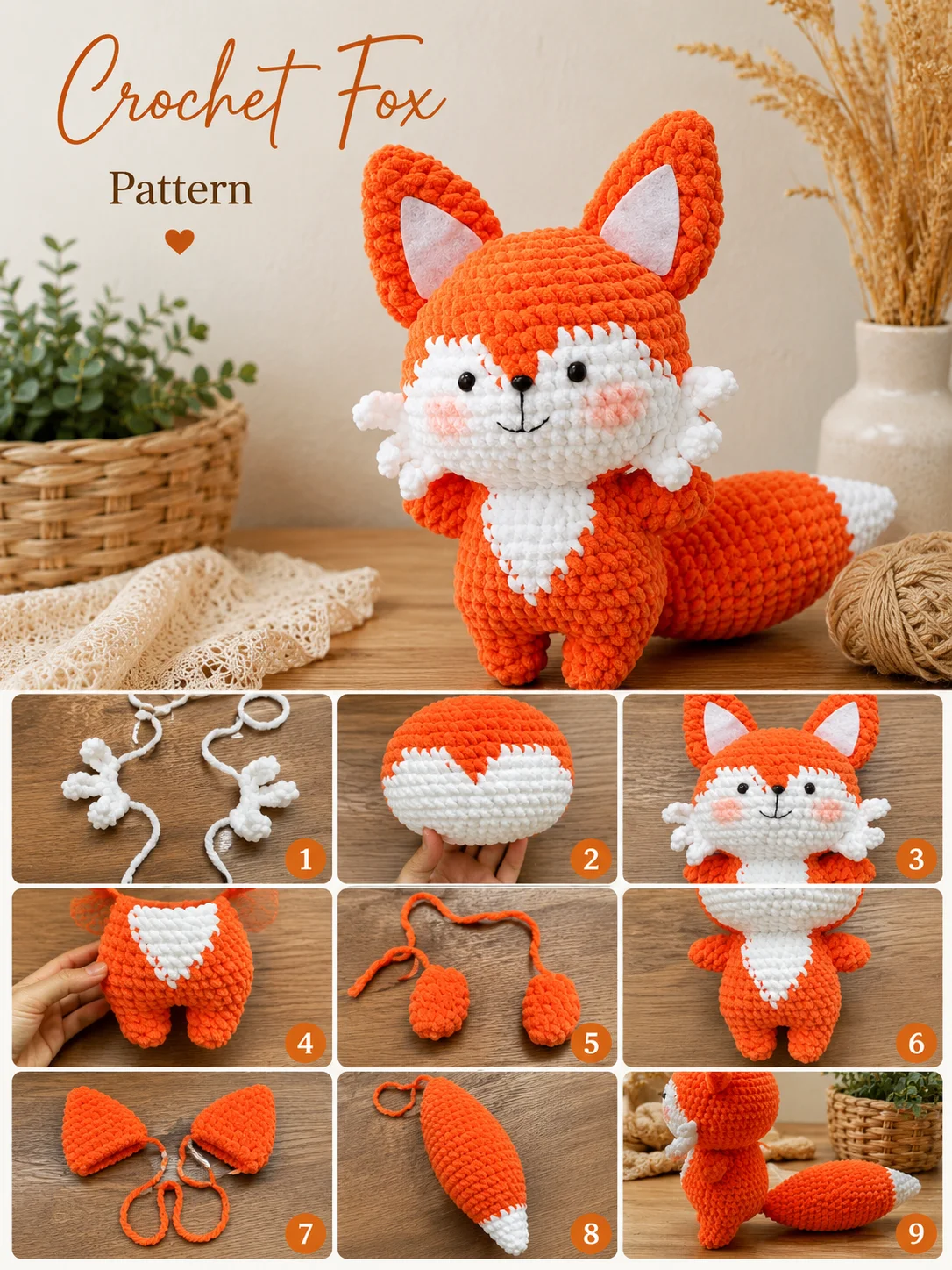
- Head and body: Often worked as one piece from the nose back, or as two separate pieces joined later. The snout may be worked directly onto the face or made separately and sewn on.
- Ears: Two triangular pieces, usually worked flat or in rounds, then folded and sewn to the head.
- Limbs (arms/legs): Four small tubes or shaped pieces, sometimes with color changes for paws.
- Tail: A long, tapered piece worked in rounds, often with a white tip. The tail may be stuffed firmly or left lightly stuffed for a floppy effect.
- Assembly: All pieces are sewn together, facial features are added (safety eyes or embroidered), and final shaping is adjusted.
Some patterns offer a no-sew or minimal-sew construction where the head, body, and limbs are worked in one continuous piece. These can be faster but may offer less control over final proportions.
Choosing Yarn and Hook for Amigurumi
Yarn choice significantly affects the look, feel, and durability of your finished fox. While specific yarn recommendations belong in the pattern itself, general guidelines apply:
- Fiber: Cotton, acrylic, or cotton-acrylic blends are common. Cotton provides stitch definition and holds shape well; acrylic is softer and often more affordable.
- Weight: Sport weight (2) to worsted weight (4) are typical. Lighter yarns produce smaller, more detailed foxes; heavier yarns make larger, quicker projects.
- Hook size: Amigurumi uses a hook 0.5–1 mm smaller than the yarn label recommends to create a dense fabric that hides stuffing. For example, a worsted weight yarn might use a 3.5 mm or 4 mm hook.
- Color palette: At minimum, you need a main coat color (orange, red, or rust), a contrast color for belly/snout/tail tip (cream or white), and black for the nose. Some patterns add a darker accent for ear backs or paws.
Always check the pattern's materials list for the designer's specific recommendations, as gauge and finished size depend on the exact yarn and hook combination.

Practical Tips for Better Amigurumi Results
These habits improve outcomes across almost any amigurumi project, including fox patterns:
- Use a stitch marker every round. A contrasting scrap of yarn or a locking marker prevents lost round counts and asymmetrical shaping.
- Stuff firmly and gradually. Add small amounts of polyester fiberfill at a time, using a chopstick or stuffing tool to push it into curves and corners. Overstuffing stretches stitches; understuffing creates limp shapes.
- Keep tension consistent. Tight, even stitches prevent stuffing from showing through. If your tension varies, practice on a gauge swatch first.
- Plan color changes. Carry the unused color inside the work (tapestry crochet style) for short stretches, or cut and rejoin for cleaner transitions on larger color blocks.
- Test eye placement before attaching. Pin safety eyes or place embroidered features with pins first. Step back and view from different angles—small shifts change the expression dramatically.
- Block sewn seams. Lightly steam or damp-block sewn joins (if yarn allows) to flatten and professionalize the finish.
Common Challenges and How to Address Them
Even experienced crocheters encounter recurring issues with animal amigurumi. Anticipating them helps:
| Challenge | Cause | Solution |
|---|---|---|
| Visible stuffing through stitches | Hook too large or tension too loose | Downsize hook; practice tighter tension |
| Lopsided head or body | Missed increases/decreases or uneven stuffing | Count stitches every round; stuff symmetrically |
| Ears flop instead of standing | Insufficient stuffing or ear base too narrow | Stuff ears firmly; consider a small wire insert if pattern allows |
| Color change jogs | Standard color change in spiral rounds | Use the "invisible color change" technique (finish last stitch of old color with new color) |
| Gaps at limb/head joins | Loose seaming or misaligned stitches | Use mattress stitch; pin pieces precisely before sewing |
Ways to Use a Finished Fox Amigurumi
A completed crochet fox can serve many purposes beyond a shelf decoration:
- Child's toy: If made with child-safe materials (embroidered eyes, secure seams, washable yarn), it becomes a durable play companion.
- Nursery decor: A woodland-themed mobile or shelf accent.
- Gift topper: Attach to a wrapped package for a handmade touch.
- Desk companion: A small fox adds personality to a workspace.
- Charity donation: Many organizations accept handmade amigurumi for children in hospitals or shelters.
- Photography prop: Popular for milestone photos or seasonal flat lays.
Consider the intended use when selecting yarn (washability) and facial features (safety eyes vs. embroidery for under-3 toys).

Frequently Asked Questions
Q: What skill level is needed for a fox amigurumi pattern?
A: Many fox patterns are suitable for advanced beginners who have completed a few basic amigurumi projects (such as a simple ball or bear). The key prerequisites are comfort with magic ring, single crochet in rounds, increases, decreases, and basic seaming. Always review the pattern's stitch list before purchasing.
Q: Can I use a different yarn weight than the pattern specifies?
A: Yes, but the finished size will change. Using a heavier yarn with a larger hook makes a bigger fox; lighter yarn makes a smaller one. Adjust stuffing amount and safety eye size proportionally. Gauge is less critical in amigurumi than garments, but consistent tension matters.
Q: Are safety eyes required?
A: No. Many crocheters prefer embroidered eyes for a softer look or for toys intended for very young children. Embroidery also allows custom expressions. If using safety eyes, choose a size proportional to the head (often 6–10 mm for medium patterns).
Q: How long does a fox amigurumi take to crochet?
A: Time varies widely based on pattern complexity, yarn weight, and your crochet speed. A small, simple fox might take 4–6 hours; a larger, detailed one with many color changes and separate pieces could take 10–15 hours or more.
Q: What stuffing is best for amigurumi?
A: Polyester fiberfill (such as Poly-Fil) is the standard choice—washable, hypoallergenic, and widely available. Some crocheters blend in wool roving for weight or use recycled polyester stuffing. Avoid cotton balls, which clump and compress unevenly.
Q: How do I wash a finished amigurumi fox?
A: Check the yarn label. Most acrylic and superwash cotton amigurumi can be machine washed on gentle cycle in a lingerie bag and air-dried. Hand-washing in cool water with mild detergent is safest for all fibers. Reshape while damp.
Q: Where can I find the Cute Amigurumi Fox pattern mentioned in this article?
A: The pattern is available at the CrochetFiles store and on Etsy. Visit those links for the complete pattern details, materials list, and purchase options.
Related Crochet Resources
If you enjoy woodland animal amigurumi, you may also want to explore patterns for raccoons, squirrels, bears, owls, and hedgehogs—all of which share similar construction techniques. For more crochet patterns, tutorials, and project ideas, visit CrochetFiles.
SEO TITLE: Cute Amigurumi Fox Crochet Pattern: Guide to Woodland Animal Amigurumi META DESCRIPTION: Learn about fox amigurumi patterns, core techniques, yarn choices, construction steps, and practical tips for crocheting a cute woodland fox. Informational guide for crocheters. SLUG: cute-amigurumi-fox-crochet-pattern-guide